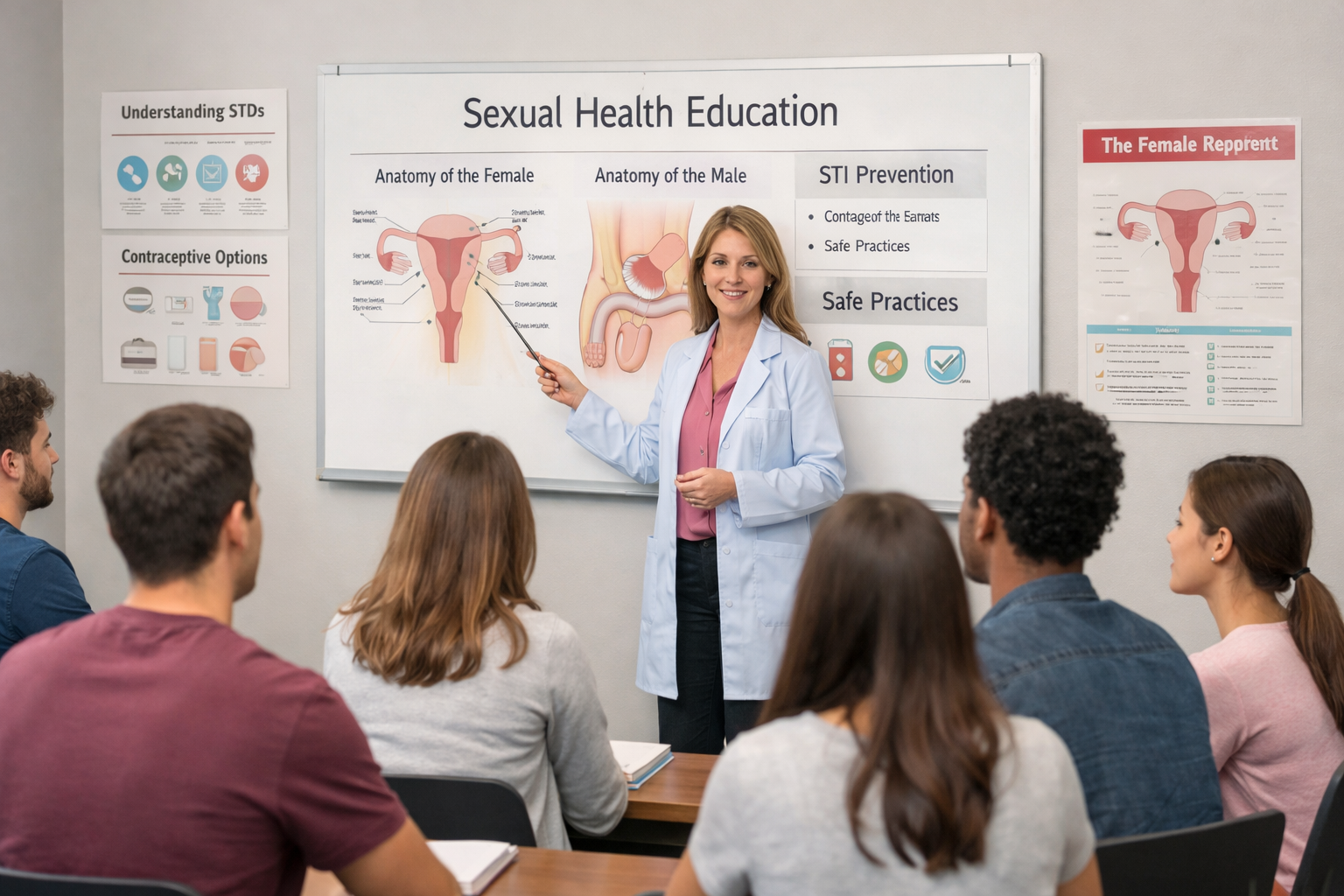
Sexual health education provides individuals with knowledge, skills, and resources to make informed decisions about their sexual and reproductive health. It is a fundamental component of overall health, promoting safe behaviors, preventing disease, and fostering healthy relationships.
Sexual health education is delivered through schools, community programs, healthcare providers, and online platforms. It equips people to understand their bodies, consent, relationships, contraception, and prevention of sexually transmitted infections (STIs).
What Is Sexual Health Education
Sexual health education covers topics related to physical, emotional, and social aspects of sexuality. Its main objectives include:
- Understanding human anatomy and reproduction
- Promoting healthy relationships and communication
- Preventing unintended pregnancies
- Reducing risk of STIs
- Supporting mental and emotional well-being
Education is age-appropriate, culturally sensitive, and based on scientific evidence.
Key Components of Sexual Health Education
1. Human Anatomy and Reproduction
- Male and female reproductive systems
- Puberty and physical changes
- Fertilization, pregnancy, and childbirth
Understanding anatomy helps individuals recognize normal development and changes.
2. Sexual Rights and Consent
- Importance of consent in relationships
- Respect for boundaries
- Legal rights regarding sexual activity
- Reporting abuse or coercion
Teaching consent promotes safety, respect, and personal autonomy.
3. Contraception and Family Planning
- Methods of contraception, including condoms, pills, IUDs, and sterilization
- How contraception works and its effectiveness
- Planning and spacing pregnancies
Knowledge of contraception enables individuals to prevent unintended pregnancies and plan for desired family size.
4. Prevention of Sexually Transmitted Infections (STIs)
- Common STIs: HIV, chlamydia, gonorrhea, syphilis, HPV
- Modes of transmission
- Symptoms, testing, and treatment
- Safe sexual practices, including condom use
Awareness of STIs reduces transmission and encourages early diagnosis and treatment.
5. Healthy Relationships
- Communication skills with partners
- Respect, trust, and equality in relationships
- Recognizing unhealthy or abusive behaviors
Education supports emotional well-being and reduces risk of exploitation or violence.
6. Pregnancy and Reproductive Health
- Understanding fertility and menstrual cycles
- Access to prenatal and postnatal care
- Maternal health services
- Reproductive rights and informed decision-making
Comprehensive education allows individuals to make informed choices about reproduction and parenting.
7. Mental and Emotional Health
- Addressing feelings about sexuality and body image
- Coping with peer pressure
- Reducing stigma related to sexual health
Sexual health education promotes overall emotional and mental wellness.
Methods of Delivering Sexual Health Education
1. School-Based Programs
- Age-appropriate curriculum
- Classroom discussions, workshops, and interactive sessions
- Peer education programs
Schools provide structured environments for consistent education.
2. Healthcare Providers
- Counseling sessions
- Access to contraception and STI testing
- Guidance on reproductive health and family planning
Healthcare providers offer personalized and confidential guidance.
3. Community-Based Programs
- Workshops, awareness campaigns, and support groups
- Outreach to marginalized populations
- Partnerships with NGOs and local health authorities
Community programs extend education to areas beyond formal schooling.
4. Online Resources
- Educational websites and apps
- Telehealth consultations
- Social media campaigns for awareness
Digital platforms improve accessibility and reach younger populations.
Benefits of Sexual Health Education
- Reduced rates of unintended pregnancies
- Lower prevalence of STIs
- Improved understanding of consent and healthy relationships
- Increased confidence and decision-making skills
- Better emotional and mental health
Challenges in Sexual Health Education
- Cultural and religious sensitivities
- Limited access to schools or community programs
- Stigma surrounding discussion of sexual topics
- Misinformation and myths
Addressing these challenges requires culturally sensitive approaches, trained educators, and open communication.
Role of Parents and Guardians
- Supporting age-appropriate discussions
- Providing accurate information at home
- Encouraging safe practices and consent awareness
- Monitoring online content and guiding children
Parental involvement reinforces formal education and provides support for children and adolescents.
Measuring Effectiveness
- Surveys on knowledge retention and behavior change
- Monitoring rates of STIs and unintended pregnancies
- Evaluating participation in education programs
- Feedback from students and community members
Measuring effectiveness allows programs to improve and target specific needs.
Conclusion
Sexual health education equips individuals with knowledge, skills, and resources to make informed decisions about their sexual and reproductive health. It reduces risks, promotes healthy relationships, and supports overall physical and emotional well-being.
Comprehensive sexual health education requires collaboration between schools, healthcare providers, parents, and communities. Awareness, access, and culturally sensitive education empower individuals to protect their health and make informed choices.